
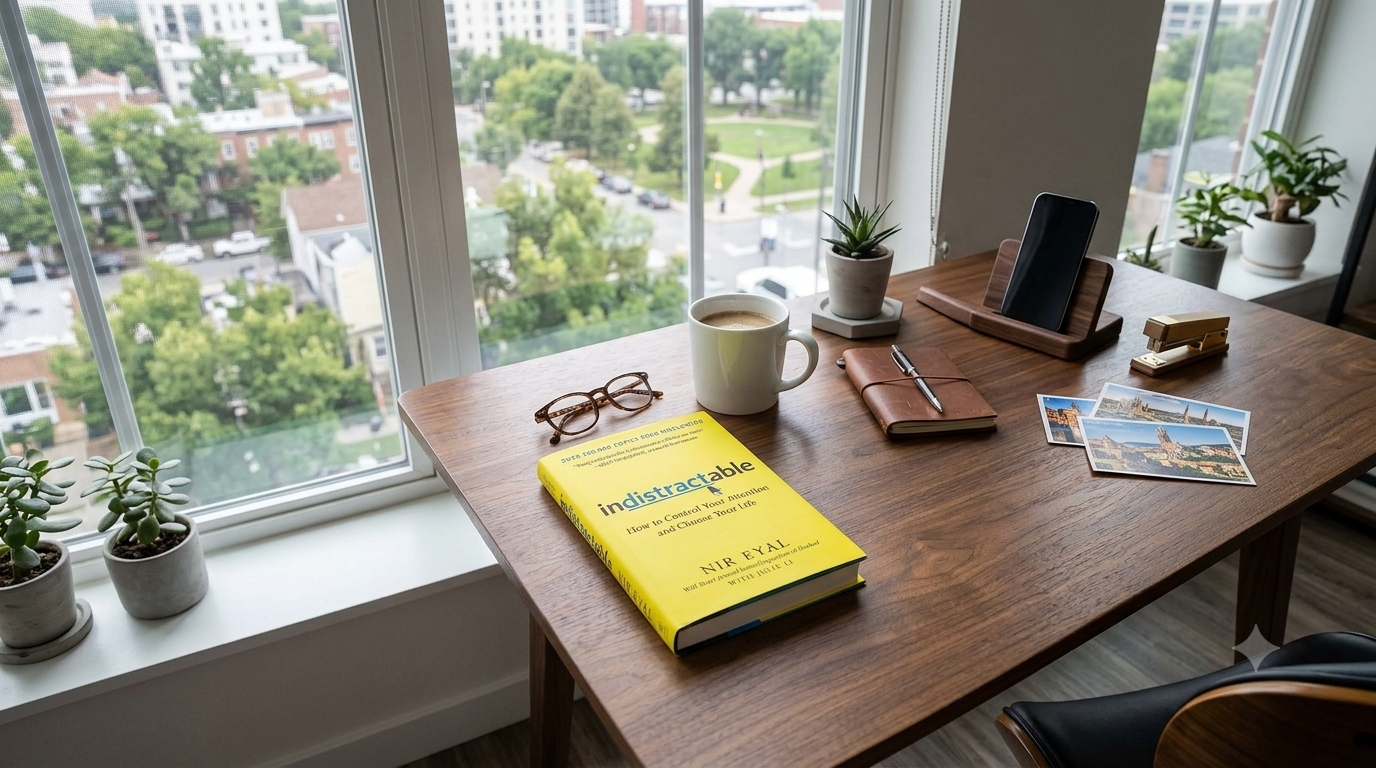
Indistractable Book Summary: How Nir Eyal teaches you to control your attention
Distraction doesn’t feel like a choice. It feels like something happens to you — a notification pulls your eyes down, a stray thought pulls your mind sideways, and suddenly twenty minutes are gone. This Indistractable book summary walks through Nir Eyal’s argument that this feeling is an illusion. Distraction isn’t something that’s done to you. It’s a skill problem and skills can be learned.
If you’ve ever picked up your phone “just to check one thing” and resurfaced an hour later, this summary of Indistractable: How to Control Your Attention and Choose Your Life is for you.
Who Is Nir Eyal, and Why Should You Listen to Him?
Nir Eyal is the author of Hooked: How to Build Habit-Forming Products — the book Silicon Valley used as a playbook for making apps addictive. Years after writing it, Eyal turned the lens on himself and noticed he was falling for the very techniques he’d taught companies to use. Indistractable is his answer: a practical, research-backed manual for taking your attention back from the products (and habits) designed to hijack it.
That backstory matters. This isn’t a book written by an outsider lecturing you about screen time. It’s written by the person who helped build the trap, explaining exactly how to walk out of it.
The Core Idea Behind Indistractable
Eyal makes one distinction that reframes the entire subject of focus: traction versus distraction.
Traction is any action that moves you toward what you actually said you’d do with your time.
Distraction is any action that pulls you away from it. But there is a twist: the same activity can be traction or distraction depending on whether it was planned and how it was planned.
Scrolling social media during a deliberately scheduled break is traction. Scrolling social media instead of finishing an important task is distraction. Nothing is inherently a “distraction” unless you know what it is distracting you from — which means the fix starts with planning your time on purpose, not just eliminating apps. From there, Eyal builds a four-part model for becoming “indistractable.”
The 4-Part Indistractable Model
1. Master Internal Triggers
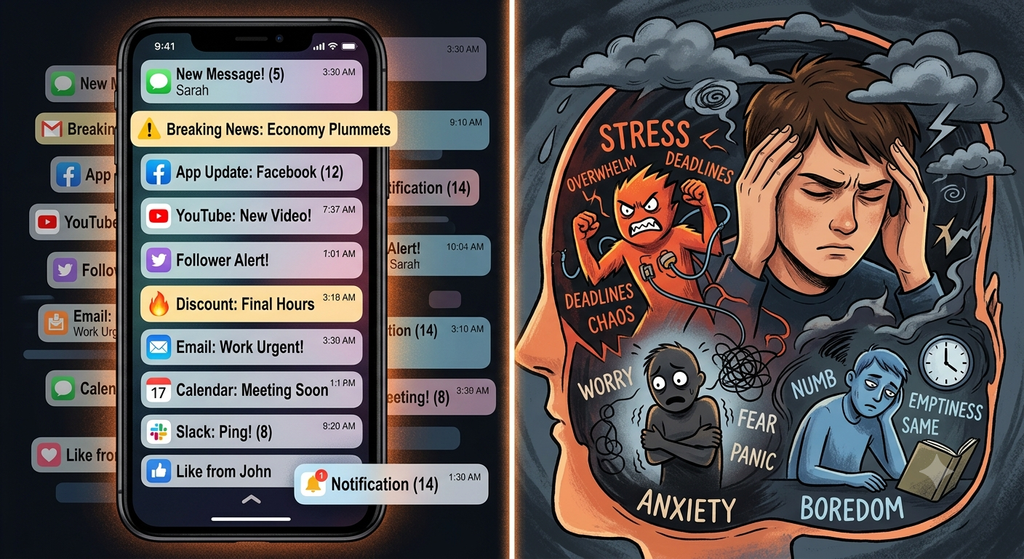
Most productivity advice blames external cues —pings, notifications, red badges. Eyal argues that the real triggers are internal triggers: discomfort, Boredom, loneliness, uncertainty, fatigue, and anxiety are the actual itch that a phone check, a snack, or a YouTube video is scratching. Distraction is simply an unhealthy way of trying to soothe an uncomfortable internal state.
The fix isn’t willpower — it is noticing the discomfort before it drives you to act, and learning to sit with it long enough for the urge to pass. Eyal walks through simple techniques for reframing the internal trigger itself, reframing the task to make it less aversive, and even reframing your own self-image (for example, dropping labels like “I’m just a distractible person”).
2. Make Time for Traction
You can’t resist distraction if you haven’t defined what you’re supposed to be doing instead. Eyal’s central tool here is timeboxing — turning your values into a literal, hour-by-hour schedule. Not a to-do list, but a calendar that accounts for every domain of your life: work, relationships, and yourself. The payoff is powerful: once every hour of your day is intentionally planned, you can finally answer the only question that matters when something pulls your attention — “Is this action in line with what I planned to do right now?” If yes, it’s traction, even if it looks like leisure. If no, it’s distraction, even if it looks like “productive” work.
3. Hack Back External Triggers
Only after internal triggers and a real schedule are in place does Eyal turn to the external world — the pings, the open-plan office interruptions, the endless meetings, the infinite scroll feeds. For each one, he asks a single diagnostic question: “Is this trigger serving me, or am I serving it?” The book gives concrete, tactical fixes for the most common culprits: turning off badge notifications, batching email at scheduled times, requiring an agenda before any meeting gets booked, saving articles to read later instead of consuming them the instant they appear, and redesigning your phone’s home screen so distracting apps take real effort to reach.
4. Prevent Distraction with Pacts
The last layer is precommitment — deciding in advance to make distraction harder to fall into. Eyal
describes three types of pacts:
Effort Pacts – add friction to the unwanted behaviour (like locking your phone in a timed box).
Price pacts – attach a real cost to breaking your intention (like a financial penalty if you don’t follow through).
Identity pacts – adopt a self-label — literally calling yourself “indistractable” — so the behaviour
becomes a part of who you really are, not just what you are trying to do.
Beyond the Individual: Workplaces, Kids, and Relationships
Indistractable doesn’t stop at personal habits. Later sections apply the same model to three other areas:
The workplace — Eyal argues that chronic distraction at work is often a symptom of poor company culture, especially a lack of psychological safety, rather than a personal failing.
Parenting — instead of just restricting the screen time, Eyal encourages parents to meet kids’ underlying psychological needs — autonomy, competence, and connection — and to teach children the same four-part model early.
Relationships — simple scripts and environmental changes (like keeping devices out of the bedroom) help partners and friends hold each other accountable without triggering shame or conflict.
Key Takeaways from Indistractable
- Distraction begins internally, as an attempt to escape discomfort — not externally, from your phone.
- You can’t call something a distraction until you have defined what it is pulling you away from.
- Planning your time — including your leisure and relationships — protects it from being hijacked. Removing external triggers only works once your internal triggers and schedule are handled.
- Precommitment devices (pacts) are what make good intentions stick when willpower runs out.
- Becoming “indistractable” is presented as a trainable, lifelong skill — not a one-time fix.
Who Should Read This Book?
Indistractable is best suited for:
Knowledge workers who feel their focus is being eroded by notifications, meetings, and open tabs
Parents trying to set healthier tech boundaries with their kids without constant conflict
Anyone who has tried digital detoxes or willpower based fixes and found they did not stick.
Readers of habit and behaviour-design books like Atomic Habits or Hooked who want the “other
side” of the story.
Final Verdict
What sets Indistractable apart from most focus-and productivity books is its refusal to treat technology as the villain. Eyal’s argument is more uncomfortable — and more useful: distraction is a symptom of something unresolved inside us, and no app blocker will fix that. The four-part model (internal triggers, timeboxed traction, external triggers, and pacts) gives readers a genuinely practical sequence to work through, rather than another list of “just delete the app” tips.





This book summary is actually better than the book review you have posted before . Ii contains more practical information which can be implemented in real life.