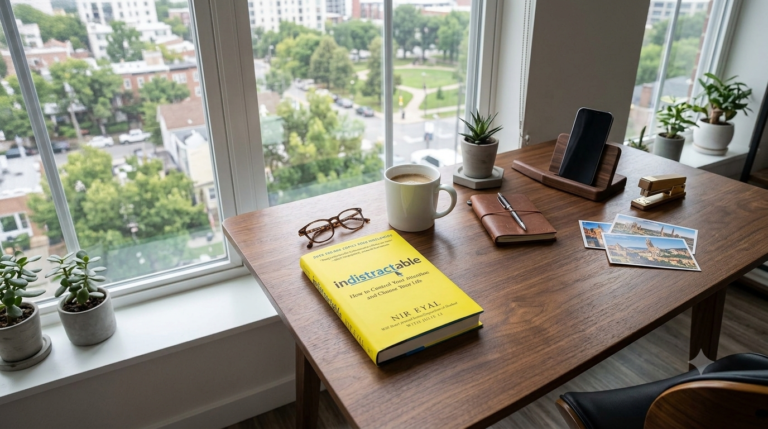
Indistractable Book Review: The Productivity Book That Made Me Stop Blaming My Phone
Have you ever picked up your phone to answer one message and somehow ended up scrolling for half an hour?
We’ve all been there.
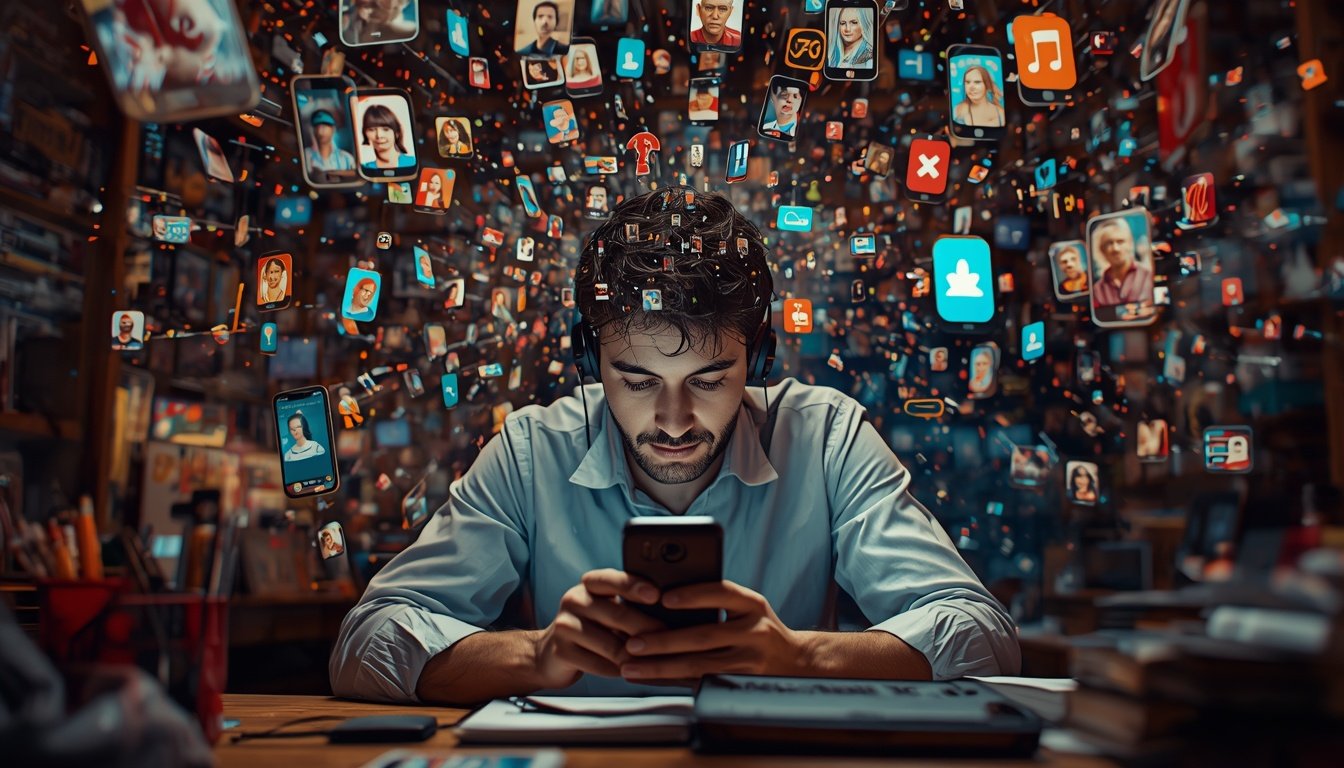
For a long time, I blamed technology for my lack of focus. Notifications, social media, YouTube recommendations—it seemed obvious that my phone was stealing my attention. But after reading Indistractable by Nir Eyal, I realized I had been asking the wrong question.
The book doesn’t argue that smartphones are harmless. Instead, it suggests something much more uncomfortable: our devices aren’t creating distraction—they’re exposing habits that already exist.
That single idea completely changed how I think about productivity, procrastination, and even my relationship with technology.
If you’re looking for an Indistractable book review, this article won’t simply walk through every chapter. Instead, I’ll share the ideas that stayed with me long after I finished reading and explain why they matter in everyday life.
The Biggest Lesson from Indistractable
Like many people, I expected another productivity book telling me to delete social media or turn off every notification.
That’s not what I found.
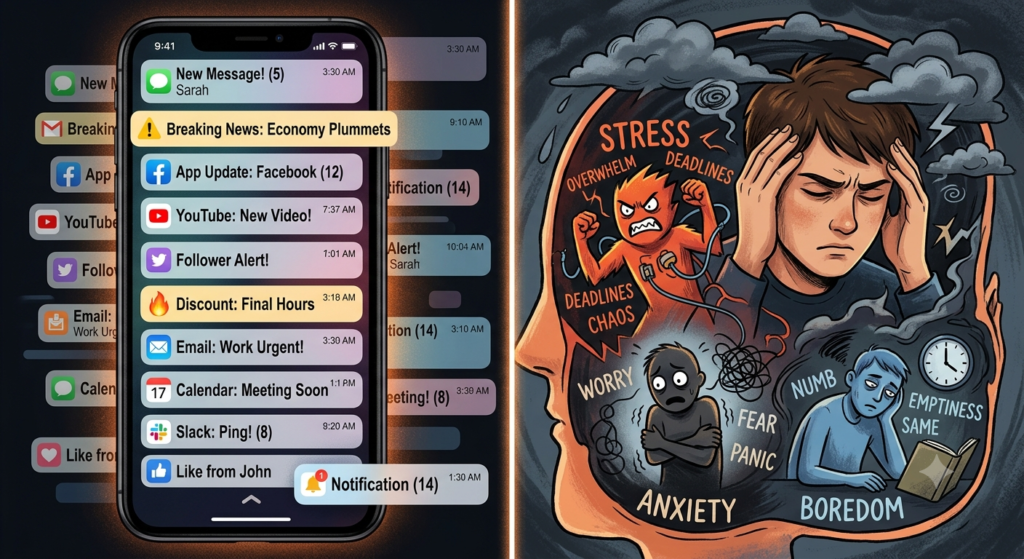
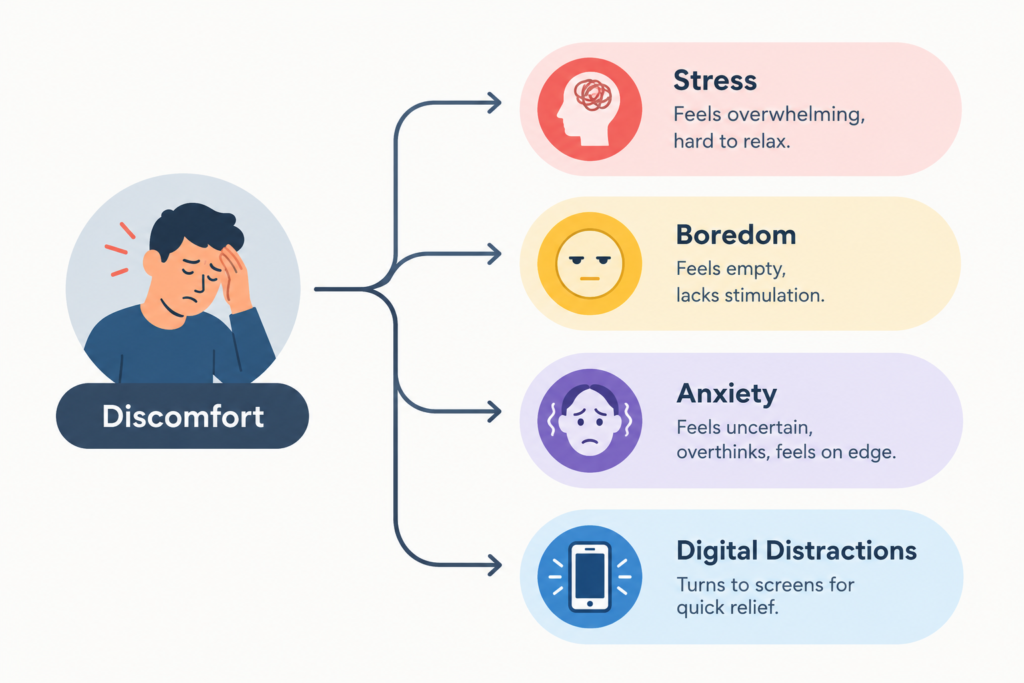
Nir Eyal makes a compelling argument that technology is only the visible part of the problem. The real source of distraction is internal. Whenever we feel bored, stressed, anxious, uncertain, or overwhelmed, our brain naturally looks for relief. Checking email, opening Instagram, watching YouTube, or even cleaning the house can become convenient ways to escape those uncomfortable feelings.
What surprised me most is that if we removed our phones tomorrow, many of us would simply replace them with different distractions.
That perspective feels refreshingly honest because it shifts the conversation from blaming technology to understanding ourselves.
The Story That Stayed With Me
One of the most memorable moments in the book isn’t backed by statistics or research—it’s deeply personal.
The author recalls spending time with his young daughter when she asked him a simple question. Instead of answering, he instinctively reached for his phone to deal with something that felt important at the time.
By the time he looked up, she had quietly walked away.
It’s a small moment, yet it says so much about modern life.
Reading that chapter made me uncomfortable because I recognized myself in it. Maybe you’ve experienced something similar too—checking your phone while talking to family, scrolling during dinner, or replying to emails while someone is trying to have a conversation with you.
Distraction doesn’t only reduce productivity.
Sometimes it quietly steals moments that can never be recreated.

One Idea That Completely Changed My View of Productivity
Among all the concepts in the book, one sentence stood out more than any other:
Time management is pain management.
At first, I wasn’t sure what the author meant.
Then I started paying attention to my own habits.
Whenever I procrastinated on writing, it wasn’t because writing was impossible. I was avoiding the discomfort of creating something imperfect.
Whenever I kept refreshing my inbox, I wasn’t being productive. I was escaping uncertainty.
The more I thought about it, the more accurate it felt.
We often assume procrastination is a time-management problem, but this book suggests it’s actually an emotional one. If we don’t learn to deal with discomfort, we’ll always find something easier to do.
That insight alone made this book worth reading.
A Simple Exercise I’m Actually Using
Many productivity books are full of advice that sounds inspiring but is difficult to apply in everyday life.
This one offers something surprisingly practical.
The next time you catch yourself reaching for your phone without thinking, pause for a second and ask:
“What am I trying not to feel right now?”
It could be boredom.
It could be stress.
It could be frustration with a difficult task.
That simple question shifts your attention away from the screen and back toward what’s happening inside your mind.
It doesn’t magically remove distractions, but it makes them easier to understand—and that’s often the first step toward changing them.
What I Appreciated Most About This Book
One thing I genuinely liked is that the author doesn’t treat technology as the villain.
Instead of encouraging readers to abandon modern devices, he explains how to use them intentionally.
That approach feels realistic.
Most of us can’t simply disconnect from email, messaging apps, or smartphones because they’re part of our work and daily lives. Rather than promoting an unrealistic digital detox, the book focuses on developing habits that help us stay in control of our attention.
It’s practical advice without sounding preachy.
Is Indistractable Worth Reading?
I don’t think this book is for everyone.
If you’re looking for a fast-paced motivational read packed with inspirational quotes, some sections may feel slower because the author spends time explaining the psychology behind distraction.
Personally, I appreciated that.
The research gave more weight to the ideas and made the advice feel grounded rather than based on personal opinion alone.
Who Should Read This Book?
I would recommend Indistractable if you:
- Frequently procrastinate even when you know exactly what needs to be done.
- Feel overwhelmed by constant notifications and digital distractions.
- Want to improve your focus without giving up technology altogether.
- Enjoy productivity books that explain why habits form, not just how to change them.
If that sounds like you, this book is likely to leave a lasting impression.

Final Thoughts on This Indistractable Book Review
When I started reading Indistractable, I expected another book telling me to spend less time on social media.
Instead, I found something much more valuable.
The book reminded me that attention isn’t something we lose because technology is powerful. More often, we lose it because we’re trying to escape discomfort without realizing it.
That doesn’t mean notifications aren’t distracting—they certainly are. But once we understand what’s happening beneath the surface, we stop seeing distraction as the enemy and start treating it as a signal.
I finished the book with a different goal than I had when I started.
Instead of trying to eliminate every distraction from my life, I’m learning to make sure I choose where my attention goes.
In a world where almost everything is competing for our focus, that may be one of the most valuable skills we can develop.